
Key takeaways
- A property in England must have an EPC rated E or above before you can grant or continue a tenancy, unless an exemption is registered.
- An EPC lasts ten years. You only need a valid one when you start marketing the property.
- If improvements to reach E would cost more than the current cost cap, you can register a cost-cap exemption.
- The government has confirmed that private rented homes must reach the reformed EPC C standard, or hold a valid exemption, by 1 October 2030. Until then, E remains the legal minimum.
What an EPC tells you
An Energy Performance Certificate rates a property from A (most efficient) to G (least efficient). It also lists recommended improvements and their rough cost, which is a useful starting point if your rating is borderline.
Only an accredited domestic energy assessor can produce one. You can look up an existing certificate for free on the government's register using the postcode.
Where your property sits
A–C
Comfortably compliant now and likely to meet the planned future standard.
D–E
Lettable today. Worth planning cheaper improvements before any rule change.
F–G
Can't be let unless improved or an exemption is registered.
Improving a low rating
- 1
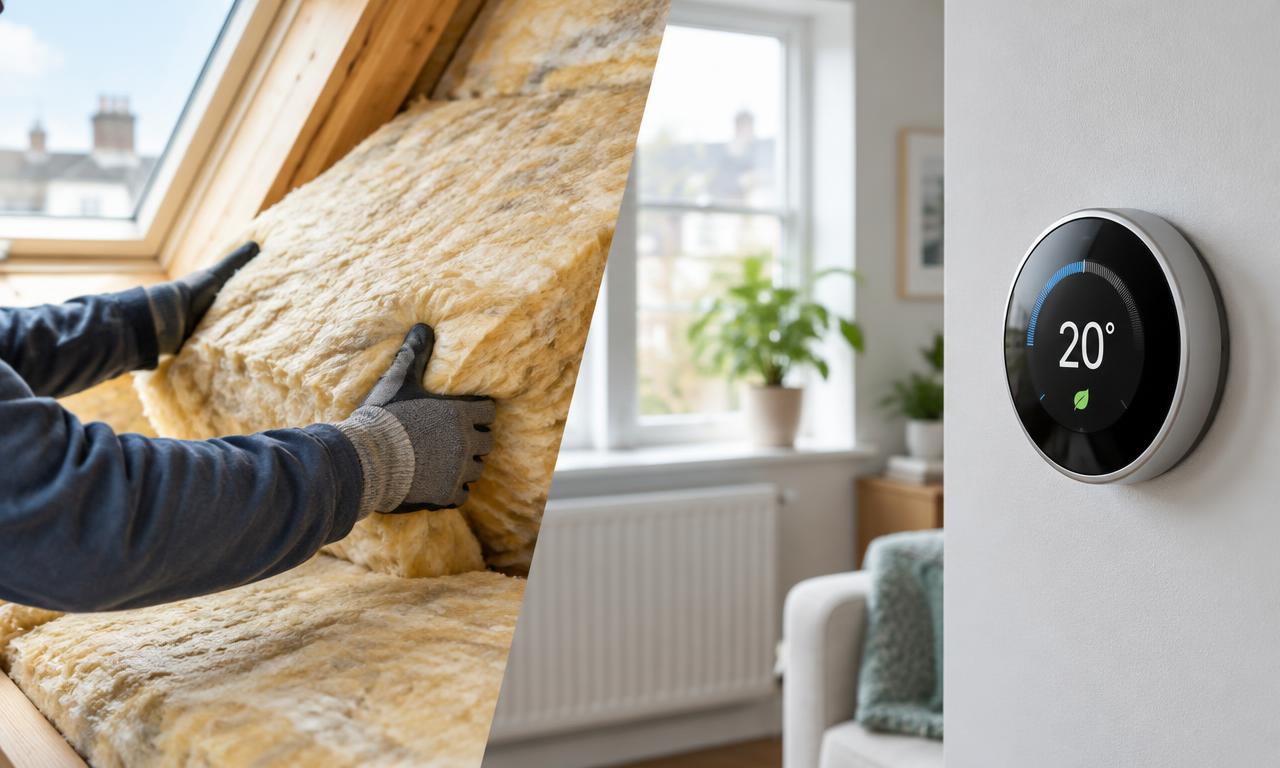
Loft and cavity insulation
Usually the best value for money on older homes.
- 2
Heating controls
A programmer, room thermostat and thermostatic radiator valves.
- 3
Boiler or heating upgrade
Replacing an old non-condensing boiler can make a big difference.
- 4
LED lighting and draught-proofing
Small changes, but they add points and cost little.
- 5
Glazing and solid wall insulation
More expensive. Check the cost-cap rules before committing.
Know when every EPC expires. Simple Landlord stores each property's EPC and rating, and flags it before it lapses or before a new let.
Get early accessRules today vs the 2030 standard
| In force now | From 1 October 2030 | |
|---|---|---|
| Minimum rating | E | C (reformed EPC metrics) |
| Applies to | All private lets | All private lets |
| Exemptions | Registered on the PRS Exemptions Register | Still available, with updated rules |
| Detail | Current regulations | Check GOV.UK for the cost cap and metrics before planning works |
FAQs
Do I need a new EPC for every new tenant?+
No. A valid EPC can be used for any new tenancy while it's in date.
What if my EPC expires mid-tenancy?+
You don't need to renew it until you next market the property, but the property must still meet the minimum standard.
Do listed buildings need an EPC?+
Possibly not. If the improvements needed would unacceptably alter the character, it may be exempt. Get advice from an assessor.
Can tenants refuse improvements?+
Yes, and if consent is refused you may be able to register a consent exemption.
Are there grants?+
Some schemes help with insulation and heating, often depending on tenant circumstances. Check GOV.UK for what's currently open.
Written and reviewed by the Simple Landlord Editorial Team
Last reviewed 22 October 2026. This guide is general information, not legal or tax advice.
Sources
Know when every EPC expires
Simple Landlord stores each property's EPC and rating, and flags it before it lapses or before a new let.